
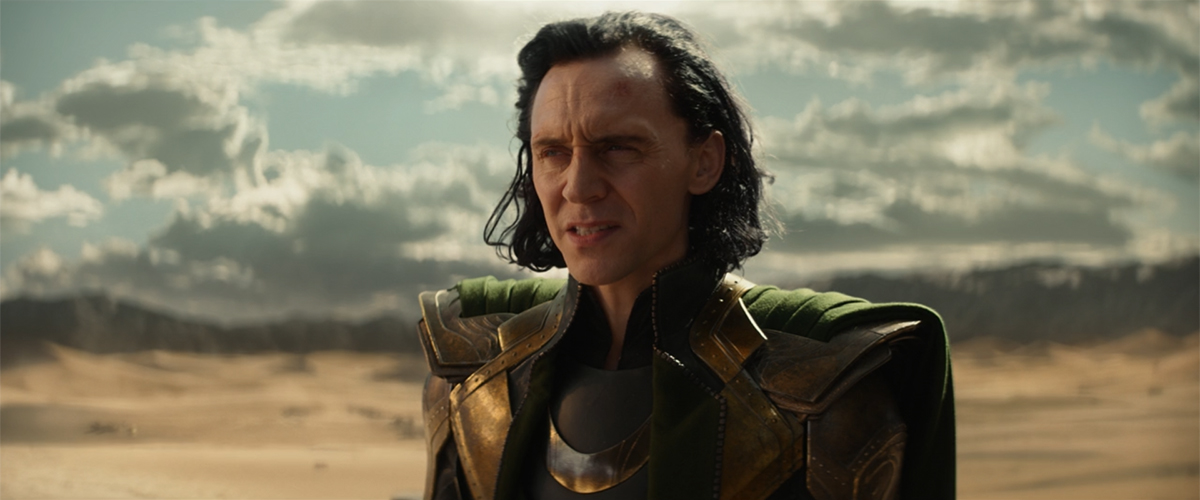
It’s the 26th of April, 2012. The Avengers (or Avengers Assemble in the UK), hits cinemas, to immediate critical and fan appreciation, and a stunning $392 million gross in its opening weekend. After five fairly successful films, this crossover event catapulted the MCU towards its cultural apex, solidifying the cinematic universe model, and ensuring the dominance of the superhero film in 21st-century blockbusters. Director Joss Whedon was hailed as King of Nerd-dom for making this possible, and Tom Hiddleston received plaudits from all for his charismatic portrayal of the MCU’s one successful villain, Loki.
It’s the 9th of June, 2021. The now Disney-run MCU has spread its sticky fingers over every inch of the cinematic landscape, with 23 films and 11 television shows, and so many more in the pipeline it’s near-impossible to keep up. Avengers Endgame (or Avengers Endgame in the UK) has crushed the frail windpipe of every previous box-office record with an eye-watering $1.2 billion opening weekend. Joss Whedon is a mild footnote in the history of the MCU, having lot most of his artistic credibility after the critical failures of Avengers: Age Of Ultron and Justice League, and all his personal credibility in the eyes of anyone decent after statements from Ray Fisher and Charisma Carpenter revealed his toxic behaviour on and off set. But Tom Hiddleston has continued to be praised for his recurring appearances as the part-time anti-villain and part-time anti-hero that Loki became over several films. Unfortunately, that all ended when he had the life squeezed out of him by the MCU’s second successful villain.
It is with this view to the past that television series Loki begins. The first scene is a repeat of a scene from 2019’s Endgame, which itself is meant as a previously-unseen moment from 2012’s The Avengers. It’s meant as a reminder of events for the viewers who don’t keep in-depth chronological flowcharts of the MCU in their heads, but it’s also a scene that would be nearly meaningless to anyone without some cursory knowledge of the films. Much of this episode is dedicated to the title character watching a clip show of his own exploits. He watches the events of films between The Avengers and Loki, providing in effect a “previously on” for both the viewer, and the character, who has been plucked out of time from The Avengers, and so has no knowledge of his own character development.
This is going to be a hard sell for any series – a lead character who has effectively had most of his previous development removed. This “previously on” sequence is an attempt to remedy that, to make sure that the version of Loki that we are seeing on screen right now is at least not entirely unlike the version of Loki that’s been building in viewer’s heads for 23 films. It could be cheap and hokey, but the show sells it, not least thanks to Tom Hiddleston’s inevitable charismatic portrayal. Complimenting Hiddleston is a cliche at this point, but his performance watching his mother die in a clip from Thor: The Dark World is particularly heart-wrenching. The show could not exist with a less impressive lead actor.
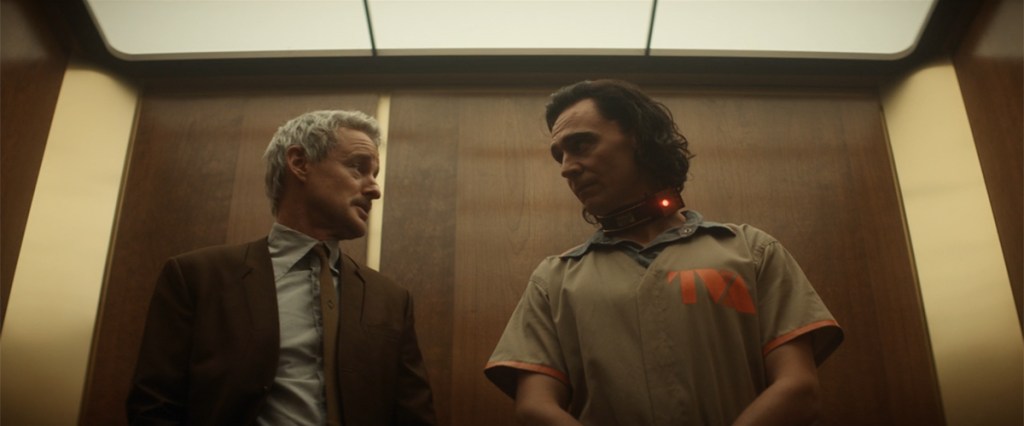
Also impressing here in his MCU debut is Owen Wilson as Mobius, a hard-boiled agent of the TVA (Time Variance Authority), who is on the case of trying to track down a mysterious figure who is killing TVA agents, and threatening the so-called “Sacred Timeline”. Wilson plays Mobius with a gentle gruffness that plays well against Hiddleton’s elaborately vicious Loki, evoking a little of Gary Oldman’s Commissioner Gordon from the Dark Knight trilogy. He’s clearly recognisable as a kind but tired detective type, handing out toys to children and helping Loki through a psychological analysis.
The Time Variance Authority is an instantly fascinating concept that is introduced to us here. A charming little 50’s-style instructional video plays for us (and Loki) to explain it, starring Tara Strong as Miss Minutes, the TVA’s very own Smilin’ Joe Fission. Simply put, long ago, there were many different timelines and multiverses, and everything threatened to get real screwy. Three gods decided there should just be one (the Sacred Timeline), and set up the TVA to ensure that time proceeds as it is ‘meant’ to. Anyone who strays off their timeline (such as our protagonist) is captured and placed back (“reset”) by the TVA. Anyone who has paid attention to the upcoming films knows that we are due to get a film called Multiverse of Madness, so we can only presume that this state of affairs is not long for this universe.
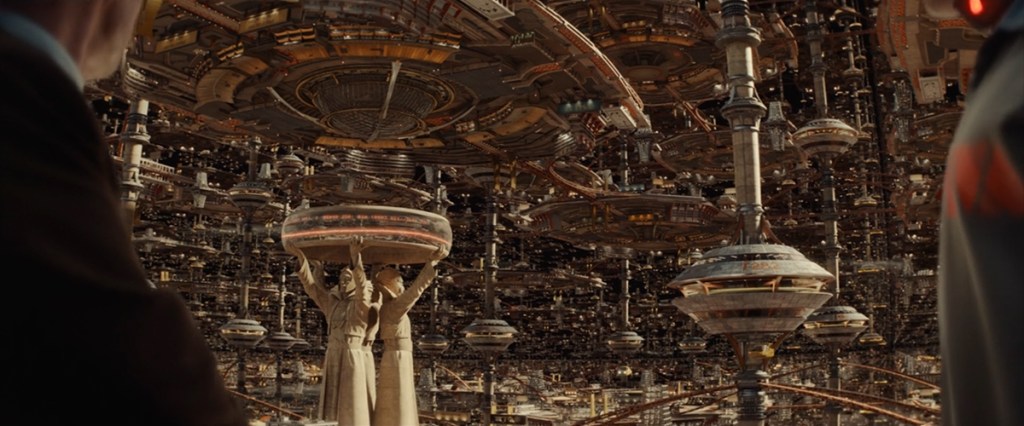
The set design and general style of the TVA is really nice, combining the fussy bureaucracy of a government workplace with ultimate cosmic power. It’s reminiscent of The Hitchhiker’s Guide To the Galaxy in that way, which in my opinion is always a plus. Office propaganda posters (“Stable Timeline, Stable Society!”) and stodgy receptionists with way too much cat memorabilia on their desk are dotted around, alongside a futuristic Jetson’s-esque skyscape, flying cars and all.
It’s a good choice to set our Chaotic Neutral God-of-Mischief protagonist up against this Lawful Neutral institution. All parties involved are just amoral enough for us to invest in the action and enjoy the inevitable fallout. It’s also interesting that Loki is effectively pitted against himself. Not just in regards to the revelation at the end of the episode that the killer Owen Wilson is hunting is a “rogue variant” of Loki, but in that the TVA itself is a reflection of Loki’s stated philosophy.
In the middle of the episode, Loki has a lengthy monologue about how freedom is an illusion, an “oppressive lie”. He claims that choice breeds shame and regret, that only his glorious leadership can alleviate. His desire for power and control is based in the exact same self-serving narrative that the TVA is – that only they know what is best for everyone else, and that anyone who diverts from that narrative is wrong by virtue of disagreeing with them. It’s an obviously convenient and fascistic tale for both parties to tell, and I look forward to the show hopefully deconstructing it going forward.
The parallel is driven home near the end, as Loki admits that the pleasure he supposedly took in killing and maiming was a “lie by the weak to inspire fear”, the same words he used to describe the TVA. It seems that in order to evolve from the anti-villain he currently is into any kind of hero, he will need to fight against the worst parts of himself, literally and metaphorically.
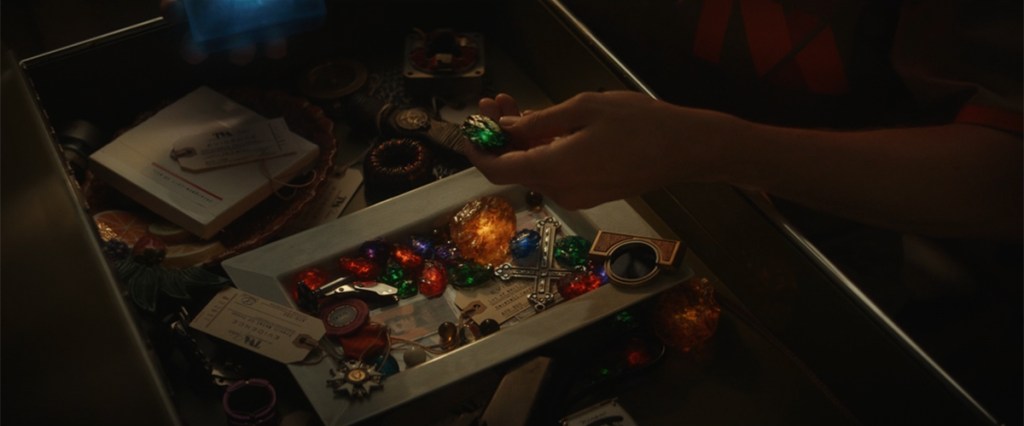
Loki gives up on his bid for freedom and agrees to work with the TVA when he finds that the organisation is in the possession of enough Infinity Stones to stuff spares into a loose drawer, and use the rest as paperweights. This is the promise of the MCU as it comes out of the ‘Infinity Saga’ that defined the first 23 films, that the massive, galaxy-defining events that we have invested in, will be spare peanuts to what we are about to see. It’s giving itself massive shoes to fill, and time will tell if that pays off. What we’ll find out sooner is whether Loki will live up to its own hype. With all the confidence performances and charming designs on show so far, my guess is that yes, it will.
 Insect Reflection
One thought on “Loki Episode One Burdens the MCU With Glorious Purpose”