
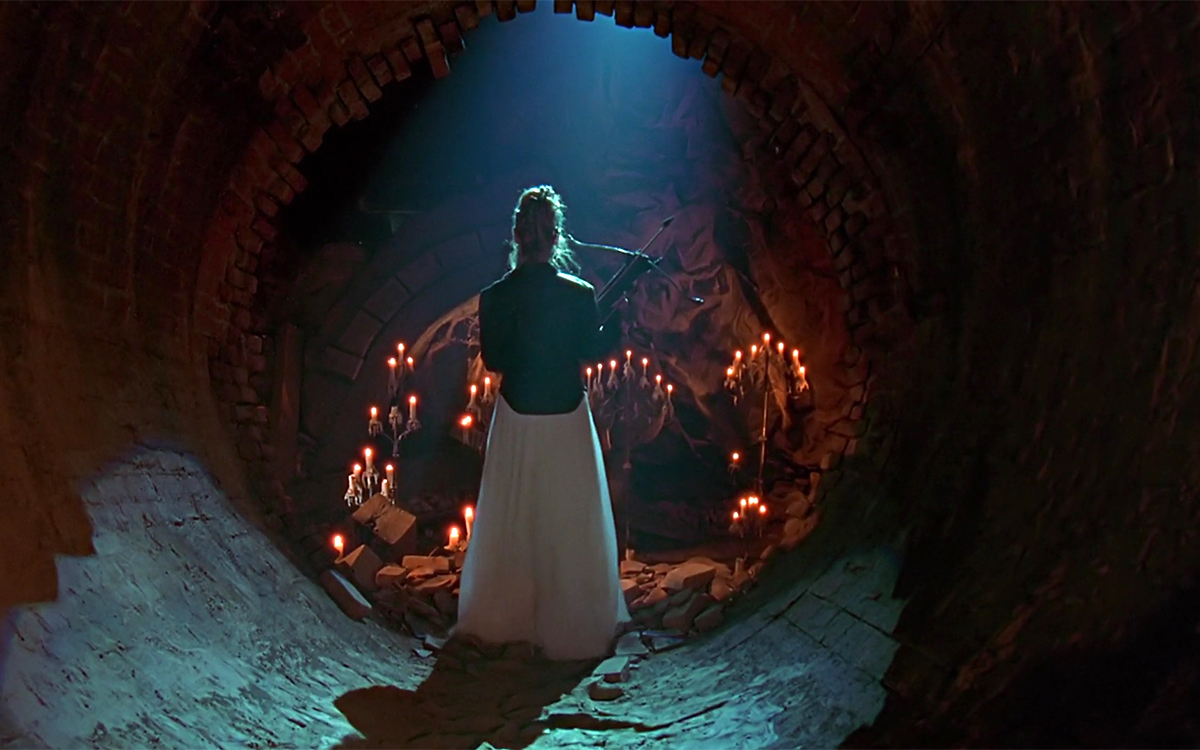
Death has been coming for Buffy all year. It has stalked and preyed on the fringes of her life – in a teacher’s chalk, in Luke bearing down over her in a crypt at the end of Welcome to the Hellmouth, in the prophecies of the Anointed, in The Master hurling her into her grave, in Giles’ sad eulogy, in her dead lover, returning to her now, and bringing with him the omen of her doom. It is now written – in the ink of the Pergamum Codex, and in the clack of Joss Whedon’s typewriter. Tomorrow night, Buffy will face The Master, and she will die.
Tag Archives: buffy summers
I Don’t Think About You Much At All (Out of Mind Out of Sight)

In this series so far, whenever I have written Cordelia’s name, it has almost always been immediately followed with “, as Buffy’s Shadow Self,”. She has existed up until now as purely a reflection of Buffy. That is her narrative function, the purpose she was designed for. She continues to fulfil this role through to season three, when a certain slayer takes hold of the reins. But this is the point in which she stops being just Buffy’s Shadow Self, and becomes a full character, part of the show in her own right.
We’re All Trapped Inside His Wacky Broadway Nightmare (Nightmares)
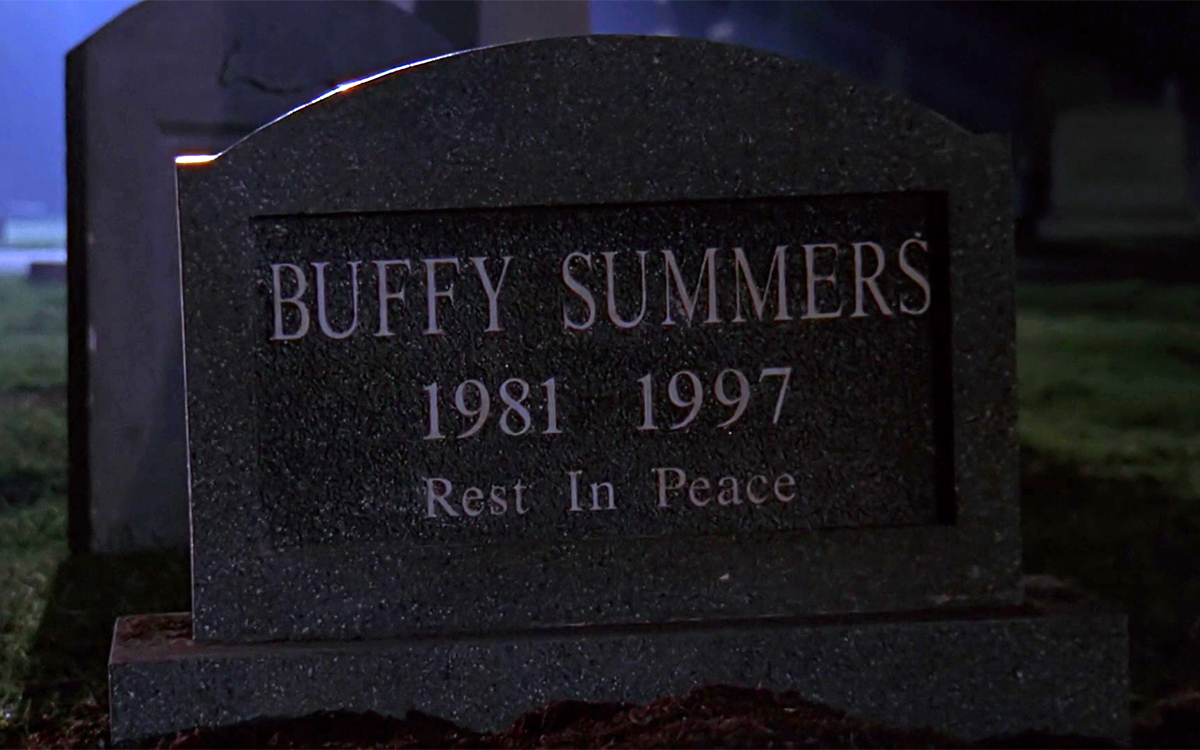
Fear is in the mind. This is the hypothesis put forward by The Master at the start of this episode, as he wraps his hand around the cross he so innately fears. And he’s right, of course. What is any emotion but a series of electrical impulses, hammering away at our synapses? The Master reaches the conclusion that if it is in the mind, then it is therefore something that can be controlled – mastered, as his name would imply. That is an idea that is a little harder to prove, and the rest of the episode is dedicated to discussing: is this true, or not?
You Never Got A Single Date In High School Did You? (The Puppet Show)
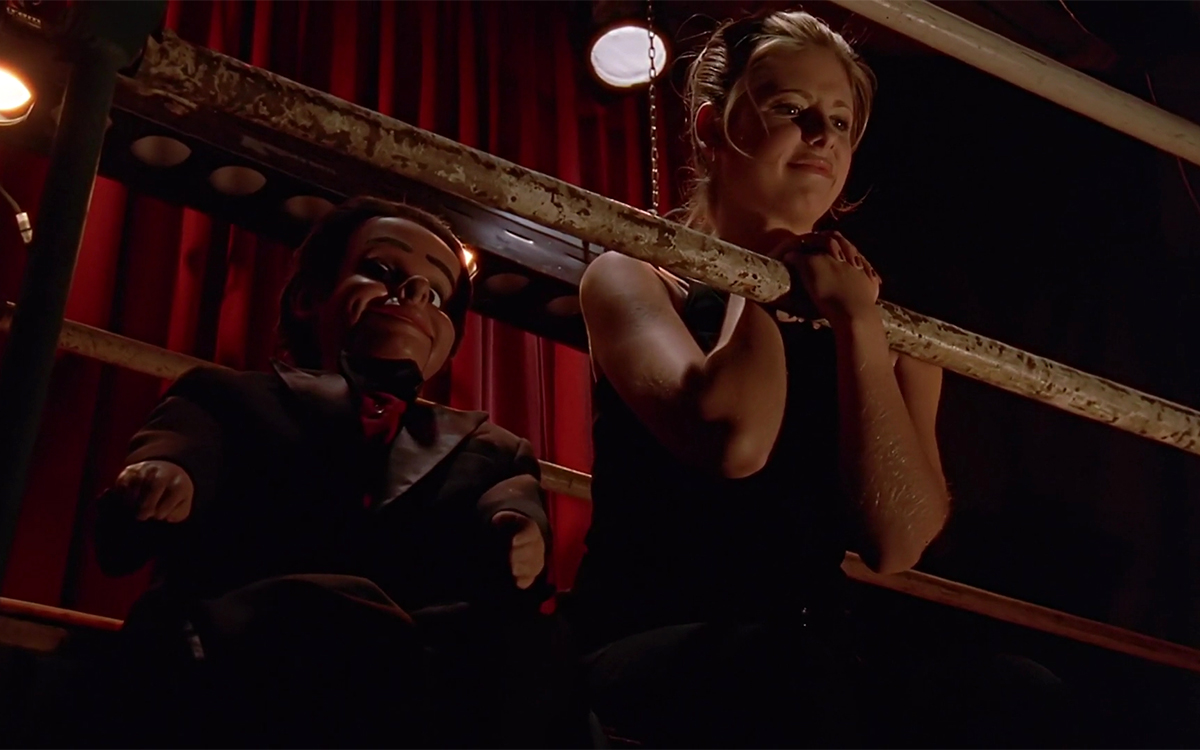
Buffy the Vampire Slayer is a story about powerlessness. This remains the case throughout the series. It’s about how the universe is fundamentally unjust, how the worst things will relentlessly happen, how you will be forced to make the most difficult choices, again and againIt’s a show that confronts the fact that we as humans simply don’t have any control over the conditions of our lives. In the first three seasons in particular though, it’s also specifically about teen powerlessness.
Am I A Thing Worth Saving? (Angel)

There comes a point in the life cycle of every piece of popular culture, when a major twist stops being a spoiler, and becomes instead common knowledge, presumably known by anyone who has not dwelt beneath rock for their entire life. Darth Vader is Luke’s father. Rosebud was his sled. It was Earth the whole time. Snape kills Dumbledore. I’m not tagging these as spoilers, because you already know them, even if you haven’t seen these films. And the fact that you do know these twists changes the fundamental experience of viewing them. You can never have the same experience that those original audiences did. The emotions that they originally intended to invoke are lost to time. The pop-cultural osmosis that these texts have undergone has twisted the texts themselves into something new.
It is in this context that we must view this seventh episode, Angel (named exactly the same as both a character and a show, seemingly in order to ruin my tagging system). Because this episode is built around a major twist: the shocking revelation that the mysterious Angel, the man who has been following Buffy around dropping cryptic warnings, is in fact…
All Men Are Beasts (The Pack)

The Pack starts off as a simple episode about bullying and social cliques. It shows us a group of bullies (never seen before and never to be seen again), and another newbie that they pick on – the nerdy and shy Lance. They get infected with a hyena spirit (as you do), and Xander joinsContinue reading “All Men Are Beasts (The Pack)”
Dates Are Things Normal Girls Have (Never Kill a Boy on the First Date)

If you’ve been active in the Buffy fandom at any point in the last twenty years, you’ll know that there are a few big questions that come up in fan spaces at least once every month to be endlessly debated. Topics that are litigated and re-litigated and re-re-re-re-ligitated until everyone who has participated in themContinue reading “Dates Are Things Normal Girls Have (Never Kill a Boy on the First Date)”
It Could Be Witches, Some Evil Witches (Witch)

With the opening two-parter laying the groundwork for much of this season, introducing the characters, the setting, the basic premise, the Big Bad(s), this episode takes the effort to introduce us to the final main element of the show as it was originally conceived – the Monster as metaphor for a Relatable Teenage Experience. The final scene of The Harvest promises a cornucopia of villains (“Not just vampires.”) from the show, but this is the first time we see it in action, with our Witchcraft-powered villain. In a way, this episode can be seen as the third part of a three-part premiere, for how much it solidifies the character dynamics and main interests of the show.
Listen To Me – You Are Not Looking At Your Friend (The Harvest)

We need to talk about Jesse.
As a character, he ostensibly exists because of Joss Whedon’s long-standing obsession with killing off a character in the opening credits. According to David Fury:
“”Joss has bandied about, ‘I love the idea of putting a character in the main credits as one of the stars of the show and then kill him right off the bat.’” [1]
This quote is in reference to what happened with Doyle on Angel, but it was apparently also the plan in this episode, to have Eric Balfour in the opening credits before abruptly killing him. It’s a trick Whedon attempts to pull over and over again – with Jesse, with Doyle, arguably with Dobson (the 10th character brought aboard Serenity in the Firefly pilot) and Tara, when Amber Benson is added to the title sequence for Seeing Red. It’s a ploy that makes sense on the surface – subverting the audience’s expectations by introducing us to a group of characters in the pilot that we assume are all going to be main characters, and then killing one of them. It’s a stunt, but one that makes sense if you’re wanting to grab an idle viewer’s attention. Game of Thrones gained worldwide attention and acclaim partially thanks to this stunt in their first season.
There’s just one problem. Jesse sucks.
I’m Not Done Baking (Welcome to the Hellmouth)
This is the story of a girl
This is the story of a young blonde woman with supernatural strength. Who subverts our expectations by refusing to be the victim, and instead of being chased in an alley, turns round and kills them. This is the story of a woman who shapes the world with her actions. A charismatic, smart, and powerful woman, whose name is said in admiration and fear. A woman who sacrifices herself, who dies and is reborn twice over.
I am talking, of course, about Darla.
 Insect Reflection